

Marine Cargo
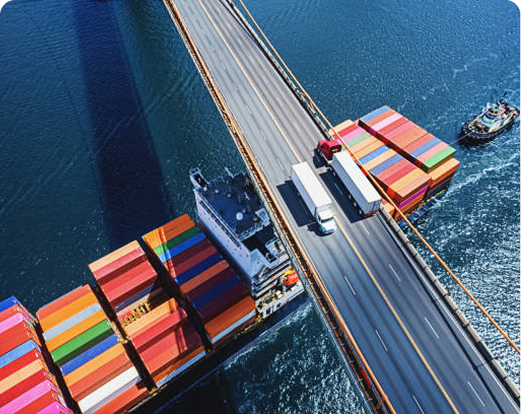
Protection for goods against physical loss or damage while in transit by sea, air or land, including loading, unloading and incidental storage.

Goods in transit pass through many hands — shippers, carriers, freight forwarders, ports and warehouses — and responsibility can shift at every handover. A single incident at sea, in port or on the road can mean lost cargo, delayed contracts and disputes over who is liable. Marine & Transport Insurance protects the goods you move and the liabilities that come with moving them.
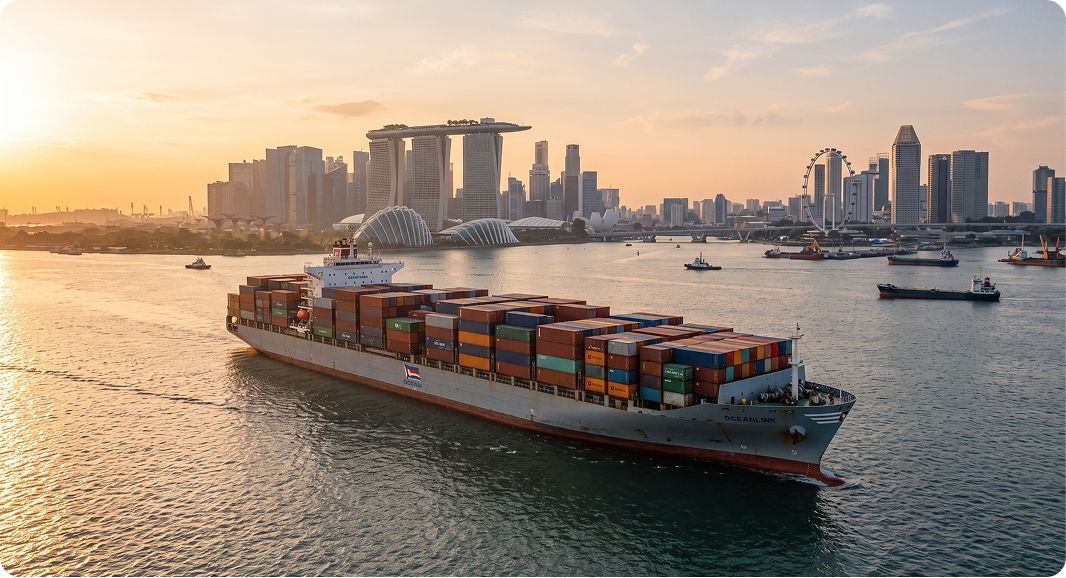
At PWS, we understand how trade and logistics businesses operate. We look at your trading terms, routes, transit modes and storage arrangements to identify where risk actually sits, then work with specialist marine markets to structure cover that follows your goods and your contractual obligations from origin to final destination.
Our Marine & Transport Insurance solutions cover a wide array of risks, including:
Protection for goods against physical loss or damage while in transit by sea, air or land, including loading, unloading and incidental storage.

Cover for the legal liability of forwarders, carriers and logistics providers for loss of, or damage to, goods in their care, custody or control.

A single policy covering goods from raw materials through production, storage and distribution, removing the gaps between transit and static cover.
Whether you are an importer, exporter, manufacturer, freight forwarder or logistics operator, PWS’s specialists help you navigate the complexities of marine and transport risk. From reviewing trading terms and contract conditions to structuring cover and managing claims across jurisdictions, we deliver end-to-end support for goods on the move.
Keep your supply chain protected with PWS’s Marine & Transport solutions, so a loss in transit does not become a loss for your business.

Marine & Transport Insurance is essential for any business that buys, sells, carries or stores goods across borders. It protects cargo, stock and logistics operations against loss, damage and liability, supporting the flow of trade across Asia-Pacific and beyond.
Trade flows, routes and contractual terms differ from one business to the next. With deep expertise and strong relationships with specialist marine insurers, we craft cover that reflects the way your goods actually move — annual open covers, single transit policies and liability programmes — without gaps or unnecessary duplication.
Speak to an Advisor
Our specialists work closely with clients to understand their supply chain, identify potential exposures and develop suitable Marine & Transport solutions.
Supported by strong insurer relationships and market expertise, we help businesses secure appropriate protection and ongoing claims support.
Physical loss or damage to goods while they’re in transit, whether by sea, air or land, from the point they leave the seller’s premises to the point they reach the buyer, depending on the terms you’ve arranged. Cover typically follows one of the standard Institute Cargo Clauses (A), (B) or (C), published by the Lloyd’s Market Association and the International Underwriting Association of London, and which set of clauses applies significantly affects what’s actually covered.
This depends on the Incoterms agreed in your sale contract, such as FOB or CIF. Incoterms are the standard trade terms published by the International Chamber of Commerce (currently the Incoterms 2020 edition), and they determine at what point risk transfers from seller to buyer. It’s a common gap for businesses to assume the other party has arranged cover when the contract terms actually leave that responsibility with them.
Not directly, and this is worth understanding clearly. Where the Hague-Visby Rules apply, which in Singapore is via the Carriage of Goods by Sea Act 1972, a carrier’s liability for cargo loss or damage is capped at a fairly low amount per package or per kilogramme, well below the actual value of most cargo. Relying on the carrier’s liability alone typically leaves a significant shortfall, which is what cargo insurance is designed to protect against, independent of what you might recover from the carrier.
Cargo cover protects the goods being transported, while collision or hull liability cover relates to liability arising from an actual vessel collision or similar incident, which is a separate exposure entirely. Businesses that own or charter vessels need to consider both, since they respond to different parts of a marine claim. Marine insurance contracts in Singapore, including how these exposures are treated, are governed by the Marine Insurance Act (Chapter 387).
The bill of lading or air waybill, the commercial invoice and packing list, and photographs of the damaged goods on arrival, ideally before the goods are moved or repacked. Having a clear paper trail from dispatch to arrival makes it considerably easier to establish where in the journey a loss occurred.
Standard Trading Conditions, such as those published by the Singapore Logistics Association, typically cap a forwarder’s contractual liability rather than remove it. Under the SLA’s conditions, for example, liability for loss or damage is generally limited to S$5.00 per gross kilogram of the goods, subject to an overall cap of S$100,000 per claim. That cap still has to be paid from somewhere if a valid claim is made, and insurance is typically what funds that payment, the trading conditions limit your exposure, they don’t make it disappear.
Most standard trading conditions, including the SLA’s, allow a customer to declare a higher value and pay an additional charge for it, which then increases the forwarder’s own contractual exposure on that shipment. Without that step, liability is typically capped at the standard limit regardless of the goods’ actual value. Either way, once your exposure is established under the contract, insurance is what stands behind you to actually pay a valid claim.
In most cases, cover for goods in your “care, custody or control” is designed to follow the goods through storage as well as active transit, but this depends on the specific policy wording and any conditions attached to warehousing or storage duration. It’s also worth noting that liability cover generally responds where legal liability, typically negligence, can be established, rather than on a no-fault basis.
This varies by policy and is usually something that needs to be specifically confirmed, particularly where you routinely subcontract part of the movement to third parties. Many policies can be extended to cover liability arising from subcontractors acting on your behalf, but it shouldn’t be assumed automatically.
Freight Forwarders & Logistics Liability is typically designed to cover your legal liability for third-party goods in your care, custody or control, not your own vehicles, warehouse building or equipment. Those generally need to be covered separately under motor and property policies.
Multi-territory cover is commonly available, but the specific countries, and any conditions that apply to each, are set out in the policy wording and generally need to be agreed with the insurer upfront rather than assumed to be automatically included.
Stock Throughput sits within Marine & Transport Insurance, alongside Marine Cargo and Freight Forwarders & Logistics Liability, rather than being a separate category of its own. Marine Cargo is typically built around the movement itself, responding while goods are in transit by sea, air or land. Stock Throughput is typically built to go further, following goods continuously across the whole cycle, from raw materials, through production, into storage, and on to distribution, under a single policy, so there isn’t a gap between the transit cover and whatever happens to protect goods once they’re sitting in a warehouse or factory.
Marine Cargo insurance is typically designed to respond while goods are in transit, including loading, unloading and short-term incidental storage along the way. Once goods settle into a warehouse or production facility for any length of time, a standalone Marine Cargo policy may not follow them there. Stock Throughput is typically designed to remove that gap, covering the full cycle under one policy rather than treating transit and storage as separate arrangements needing separate cover.
Generally, yes, that continuity across raw materials, work in progress and finished goods is one of the main features of a Stock Throughput programme, though the exact scope and any sub-limits by category are set out in the specific policy wording.
In most cases, yes, storage exposure is typically built into Stock Throughput cover as standard, rather than treated as an add-on, which is one of the main reasons businesses choose it over a standalone marine cargo policy. The specific storage locations covered, and any conditions attached to them, are set out in the policy wording.
Stock Throughput policies commonly follow a similar structure to marine cargo cover, often referencing the Institute Cargo Clauses (A, B or C) published by the Lloyd’s Market Association and International Underwriting Association of London, which range from a broad “all risks” basis (Clause A) to cover for a more limited, named list of perils (Clause C). Which basis applies, and what’s excluded, depends entirely on the policy actually placed.
Generally, yes. Stock Throughput is typically designed to cover the stock and goods themselves, not the building, fixtures or fixed machinery they’re stored in, which usually still needs to be covered under a separate property policy.
Rather than a single fixed sum insured, Stock Throughput programmes commonly use a declaration-based arrangement, where stock values are reported periodically (for example monthly) and premium is adjusted accordingly, or a limit is set based on estimated peak or average stock levels. The specific basis used is agreed with the insurer at placement.
These FAQs are provided for general information only and do not constitute insurance, legal, financial or professional advice. PWS Global Risks acts as an insurance broker and intermediary and does not underwrite or issue policies. The descriptions above reflect general market practice and are not a summary of any specific policy: the actual scope of cover, exclusions, conditions and limits are set out in, and governed entirely by, the wording issued by the relevant insurer, and may differ from the general descriptions above.
Please contact us at [email protected] for advice specific to your business.
Sources and references
Stay informed with insights on insurance, risk management, claims trends and emerging business exposures.